A testing notice has arrived
A reminder is a reason to arrange testing, not evidence that the device has failed. Check which assembly the notice identifies and retain its deadline and submission instructions.
Backflow Services
A testing reminder, a leaking assembly or a new connection calls for a clear next step. The Plumbing Knight provides Backflow Services for Moore County homes and businesses, from testing existing devices to repair, rebuilding and installation.
Make an informed decision
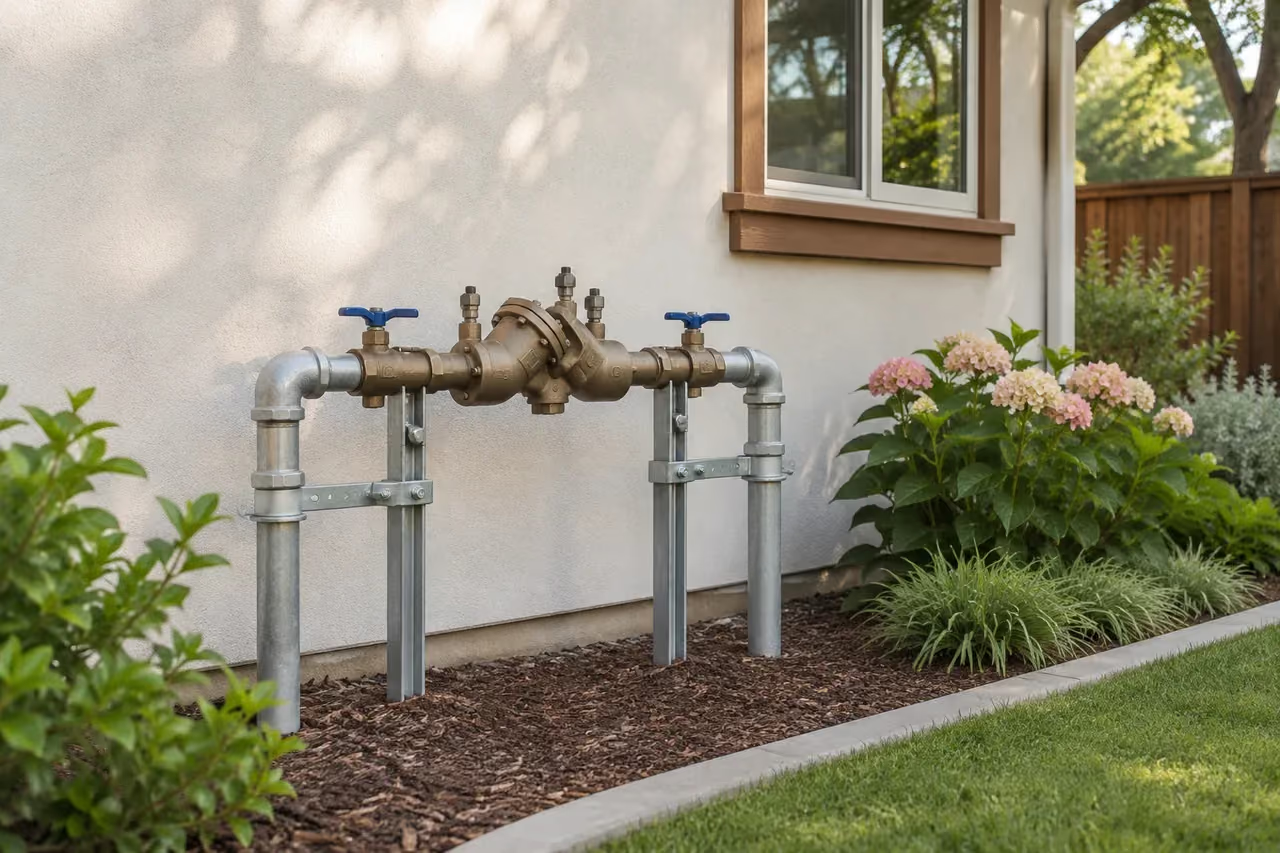
Backflow happens when water reverses direction through a cross-connection between drinking-water plumbing and a non-potable source. Depending on that connection, the reversed flow can introduce contaminants into the clean supply. A backflow prevention device is intended to protect against this reversal; its presence alone does not establish that it is working.
The Plumbing Knight provides Backflow Services for homes and businesses in Moore County, including installation, testing, repair and rebuilding of backflow prevention devices. The service also includes handling annual inspection paperwork. When you enquire, explain whether you have a testing notice, an existing device with a problem or a new installation to discuss.
Testing, repair and replacement answer different questions. Testing evaluates operation; repair addresses a fault in an existing assembly; replacement or installation concerns the equipment needed for the connection. Plumbing Materials & Options offers a useful starting point for equipment questions. If the concern extends beyond the device, describe it alongside your enquiry about wider plumbing services.
Recognize the pattern
A reminder is a reason to arrange testing, not evidence that the device has failed. Check which assembly the notice identifies and retain its deadline and submission instructions.
Water around an assembly deserves attention, but appearance alone cannot identify the cause or establish whether protection is intact. Note where and when water appears without adjusting components.
An unsuccessful test calls for review of the reported findings. It does not automatically mean the entire device needs replacement; repair suitability depends on the fault and condition.
Adding or changing a non-potable connection raises a question about suitable protection. It does not, by itself, prove the existing device is wrong. Explain the change before purchasing equipment.
A useful starting point
Keep the testing reminder, previous report and any repair records together. Note the stated deadline and the authority requesting the report rather than relying on memory.
If safely accessible, photograph the assembly and its identification label. Do not remove covers, turn valves or dismantle parts to obtain information.
Explain what the connection supplies, such as irrigation or business equipment, and mention recent changes. If you do not know what it serves, say so rather than guessing.
Make the location accessible without moving heavy equipment yourself. Ask whether the proposed work may interrupt water use, and flag any household or business activity that depends on that supply.
Understand the estimate
A routine test, fault diagnosis, rebuild and complete replacement involve different work. Request a clear description of what is included before comparing estimates.
The condition of the assembly and the components required influence whether repair is practical and how extensive the work may be.
The assembly's location and the space available to work can affect the scope. Share photographs and explain any locked enclosure or access restriction when enquiring.
Ask whether the proposed price covers testing, corrective work, any follow-up testing and inspection paperwork. These are distinct tasks even when discussed in one enquiry.
Do not bypass, remove or adjust a backflow device to stop a leak or restore flow. That can compromise protection without resolving the underlying problem. If water looks or smells unusual, do not assume the backflow device is the cause—or that clear water proves it is safe. Seek guidance from your water authority before drinking or cooking with water you suspect is contaminated.
Clear answers
Annual testing is part of The Plumbing Knight's backflow service offering. Confirm the applicable schedule and deadline with your water authority, especially if you have recently taken responsibility for the property. Do not assume the previous owner's testing arrangements have transferred.
No. A device can appear intact without that establishing correct operation. Visible leakage is useful information to report, but neither the presence nor absence of leakage replaces an operational test.
Not necessarily. Repair or rebuilding may be appropriate depending on the fault, device condition and required parts. Ask what the findings mean, what each option includes and how correct operation will be confirmed after the work.
Yes. The Plumbing Knight's Backflow Services include handling annual inspection paperwork. Have your notice and previous report ready, and clarify which device and reporting deadline apply to your enquiry.
Ask about interruption before the work is arranged; the answer depends on the assembly and proposed scope. Mention water-dependent business equipment or household needs so you can plan around any interruption rather than assume continuous supply.