
Practical guides · Plumbing troubleshooting
Why Do My Pipes Bang When the Washing Machine Stops Filling?
A bang at the end of a fill cycle can point to water hammer. Learn how to describe the sound, spot a leak and decide what to ask a plumber to check.
What you’ll learn
- Write down whether the sound happens when water stops, while the drum spins or as the washer drains.
- Look for moisture at visible hose connections, on the floor and at nearby trim.
- Ask a plumber to check the supply pressure and pipe support before choosing a repair.
You can be in the next room and still hear the moment the washing machine stops filling. A single hard knock at that instant is a clue about the supply plumbing. A washer that thumps through its spin cycle gives you a different clue. Start with the timing, and you can narrow down what to have inspected without moving the appliance or opening a wall.
Match the sound to the part of the cycle
A washer opens an inlet valve to fill, then closes it when the machine has enough water. If moving water stops abruptly, the change can send a pressure wave through the supply line. That is water hammer. You may hear the bang near the laundry room, or farther away where a pipe moves against a support.
A repeating thump that follows the speed of the drum suggests the appliance or load is worth checking. A noise during draining points to a different part of the cycle. A short recording and the exact point in the cycle can be more useful to a plumber than trying to locate the sound by ear.
Check what you can see safely
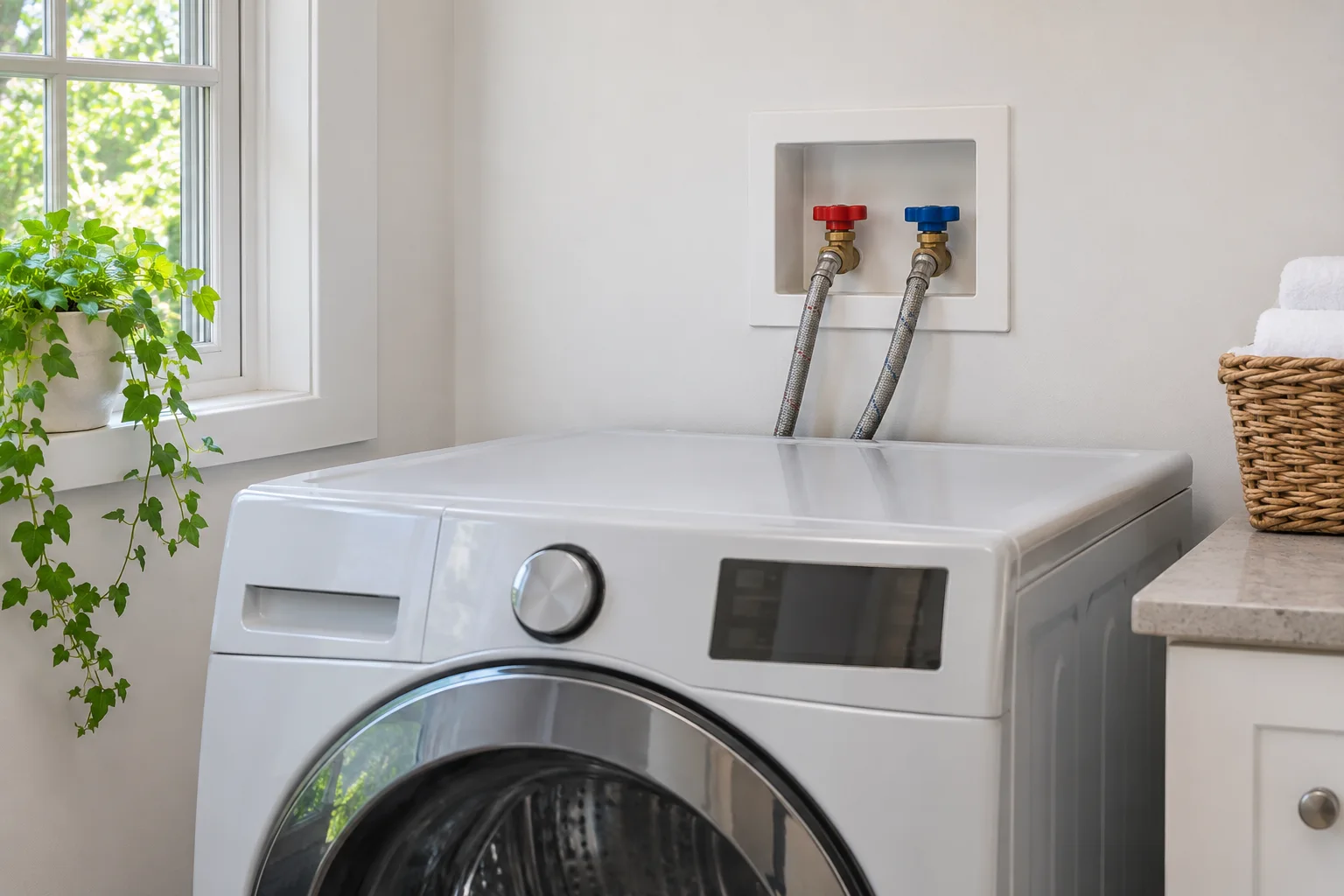
Look at visible supply hoses, the recessed valve box and the floor around the washer. Moisture, staining or a hose that visibly bulges makes this more than a noise complaint. If you see an active leak, stop using the washer. Shut off its supply only if you can safely reach the valves. Keep away from standing water near electrical equipment and call for help.
If the area is dry, note whether the knock also happens when another fixture shuts off. There is no need to run extra loads or repeatedly snap faucets closed to test it.
Ask for the cause before buying a part
A plumber can measure water pressure, look at accessible pipe supports and check whether the problem is isolated to a quick-closing valve. If the plumbing needs a water hammer arrestor, the product must suit the fixture and its placement. A fixture-specific arrestor can absorb the pressure surge near the valve. A loose pipe support or a pressure issue elsewhere calls for a different response.
When you call about a plumbing repair in the Sandhills, describe the affected fixture, which other taps behave the same way and whether a washer or valve was recently replaced. Those details help scope the visit.
Questions & answers
Why does the bang sound like it is in a different room?
The pressure wave moves through the supply piping. A section farther from the washer can move against nearby framing and make the loudest sound.
Should every noisy washer get an arrestor?
Ask a plumber to identify the noise first. An arrestor addresses a pressure surge. Appliance vibration, loose supports and draining noise need their own checks.
Sources & further reading
- Watts residential water hammer arrestors
Residential applications for pressure-shock control, including washing machines.
- WSSC Water guidance on water hammer
Why sudden changes in water flow and pressure can create banging in piping.
Prepared and automatically checked on . Conditions, costs and requirements can change. Ask about the details that apply to your situation.